Are you someone who says “we” often? “We” is a small but mighty word. At its worst, “we” is used to erase individuality and speak on behalf of others: “We all think…” or “We all want…” when the person included in the “we” might not want to be included.
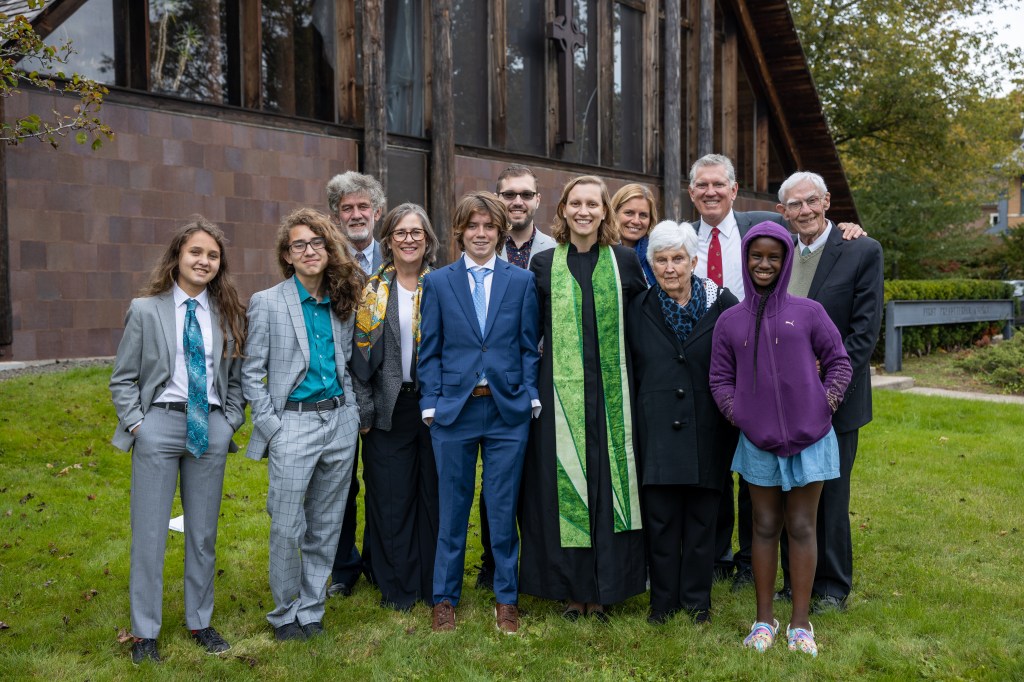
At it’s best, “we” is used to include, unite, and make a statement. “We” is collective. I heard a sermon recently in which the pastor asked us about the “we” people in our lives. He asked us to recognize the people who will support us, love us, and join together with us to make a “we.” This sermon made me think about how central it is to have good friends and communities in which you are included as a “we” in a way that is life-giving and empowering.
Our culture praises rugged individualism. We lift up people who work hard without help and make it in the world on their own. While I appreciate a strong work ethic, this lone-wolf mentality is deeply un-Christian. Throughout Jesus’ life he traveled with friends and family, and expanded his group along the way.
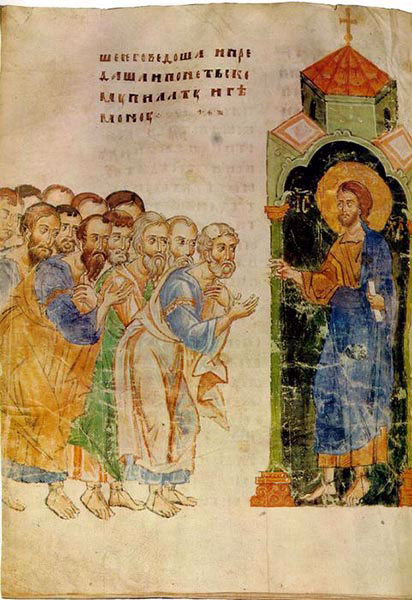
from the Russian Siysky Gospel, 1340 C.E.
All three of the Synoptic Gospels (Matthew, Mark, and Luke) include the story where Jesus is told that his mother and brothers are waiting for him. Jesus responds to this question in Mark by saying: “’Who are my mother and my brothers?‘ And looking at those who sat around him, he said, ‘Here are my mother and my brothers! Whoever does the will of God is my brother and sister and mother‘” (Mark 3:31-35 NRSV). If a story occurs in three gospels it is certain that the drafters of the Biblical cannon wanted to make sure that the faithful of all generations understood such a story. In this story, Jesus defines his “we” broadly. He’s not rejecting his family, but expanding his notion of family to include all those who strive to do the will of God.
I hope that you can think of your “we” broadly, like Jesus. Who do you consider to be a part of your “we”? Who are your “we” people who will support and love you through both joyful and difficult times? We must cultivate and nurture these sacred relationships, and make sure we have enough “we” people in our lives. When we choose to see an expansive “we”, we are building the beloved community.
Text copyright © 2023 Grace Woodward. All rights reserved.
 Grace in the Wilderness
Leave a comment