Hulton Archive/Getty Images
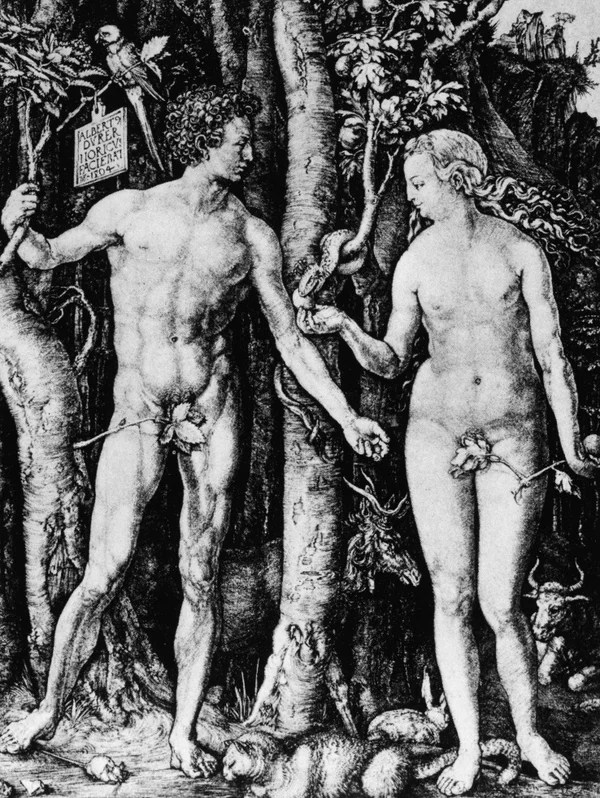
“Ayeka” is God’s first question in the Bible. “Where are you?” God is in search of Adam and Eve in Genesis 3; The pair has just eaten the fruit from the forbidden tree (N.B.: Palestinian tradition says the fruit was an aphrodisiac pomegranate, not an apple) and they are now hiding from God.
It seems like an odd choice for Adam and Eve to try to hide from God when they’re supposedly the only two people in the Garden of Eden. It also seems odd that the all-knowing creator God could lose the only two people he created. If we consider the book of Genesis to be a theological use of mythological themes to explain human nature, we can see that elements of the story are included to convey a message, not to recount facts.
What point is the author of Genesis attempting to make with God’s first–and profoundly simple–question: Ayeka? Where are you?
Talmudic tradition holds that this question was not for God, but for us. If God is all-knowing, then God certainly knew where Adam and Eve were, and certainly knows where we are individually–both physically and spiritually. And yet, God still asks: “where are you?” We are supposed to see the absurdity in Adam and Eve’s attempt to hide from God to remind us that, no matter how hard we may try, it is impossible for us to hide from God. God’s question–ayeka–prompts us to remember this truth, and to assess for ourself where we are on our physical and spiritual journeys. God doesn’t need to ask the question for God’s own knowledge, but WE need to be asked.
As the year winds to a close, I am struck by God asking me this question. Where am I? Where would I like to go?
May this question be fruitful for you as you look forward to a new year (pun intended).
 Grace in the Wilderness
Leave a comment